Fly Rod 6wt 9ft — Finding the Spine and Gluing

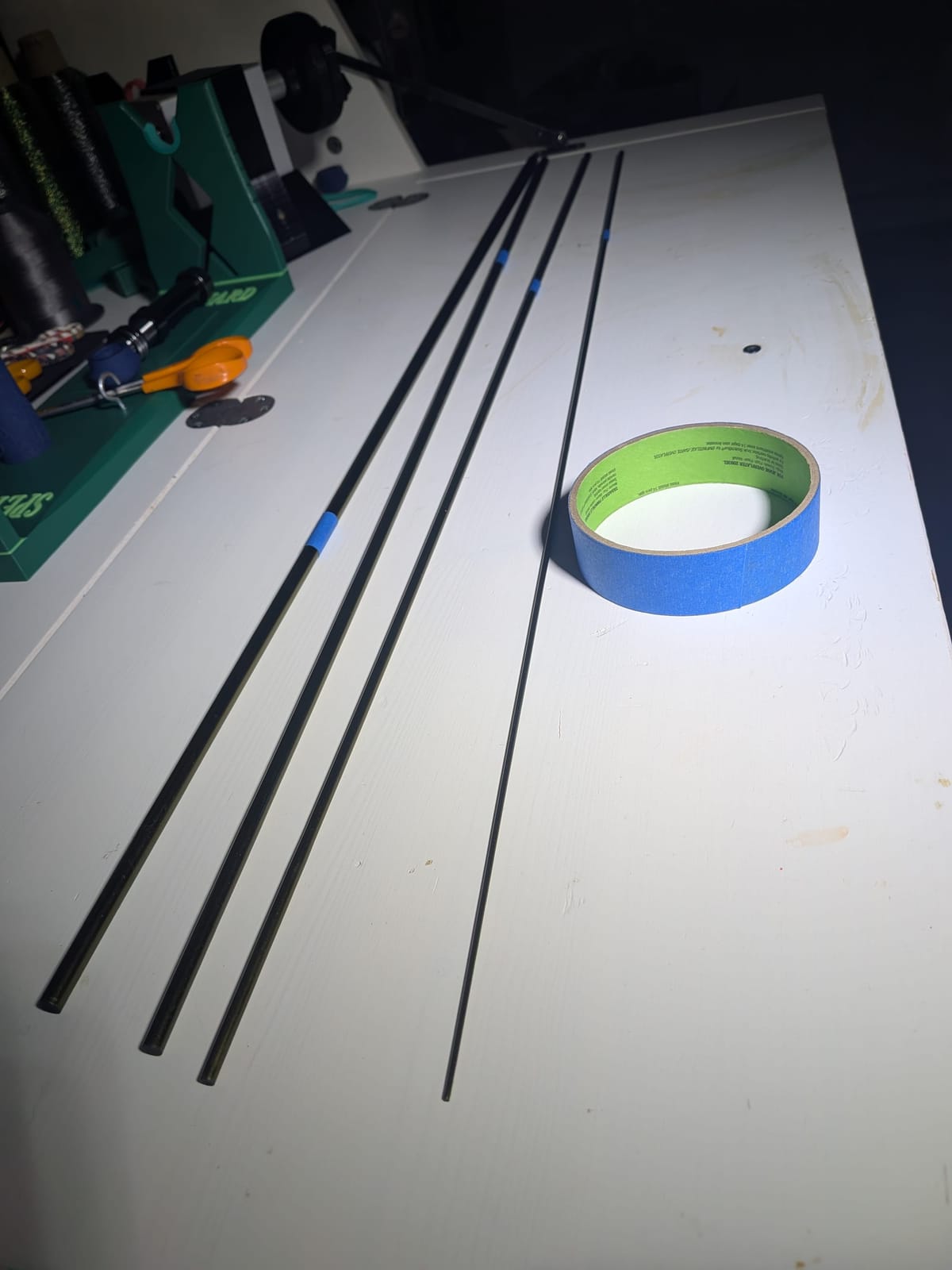
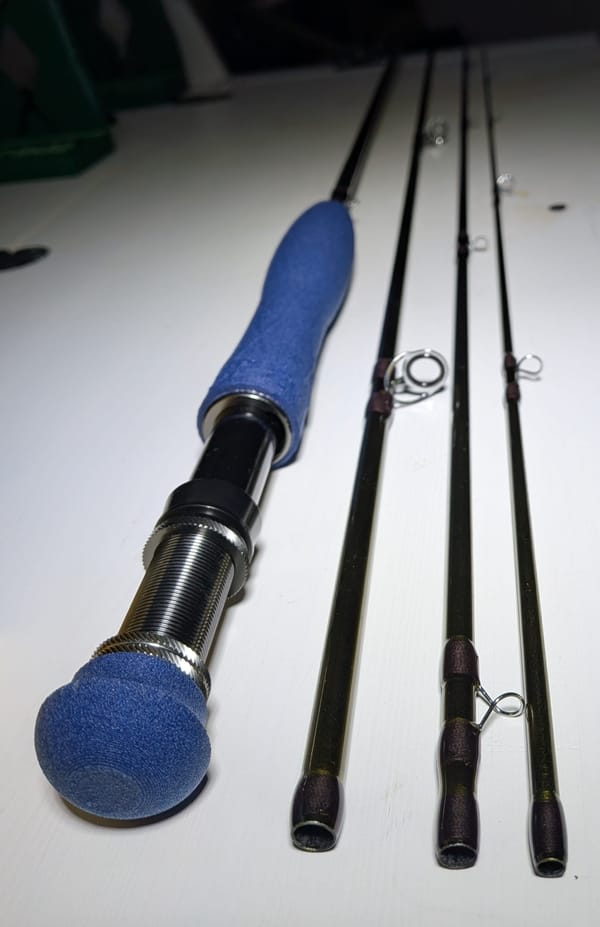
So we've reached the point where it's time to find the blank's spine. YouTube is full of videos on this — just search for "find blank spine." And if you watch several different builders, some bend the thin tip against the table, others the thick end. They might also advise placing the guides at 45 or 90 degrees from the actual spine, etc. The style is freeform. When I find the side of the blank that naturally wants to flex most when rolled against the table, I mark that (top) side with tape. This particular blank was stiff enough that I could only really flex it from the two tip sections. From the two thicker sections I just checked that the rod is as straight as possible when assembled. This blank was straight in every way, so I could proceed fairly freely. For marking tape and temporarily securing guides, I use blue painter's tape. It doesn't leave as nasty adhesive residue as some of the yellow stuff.
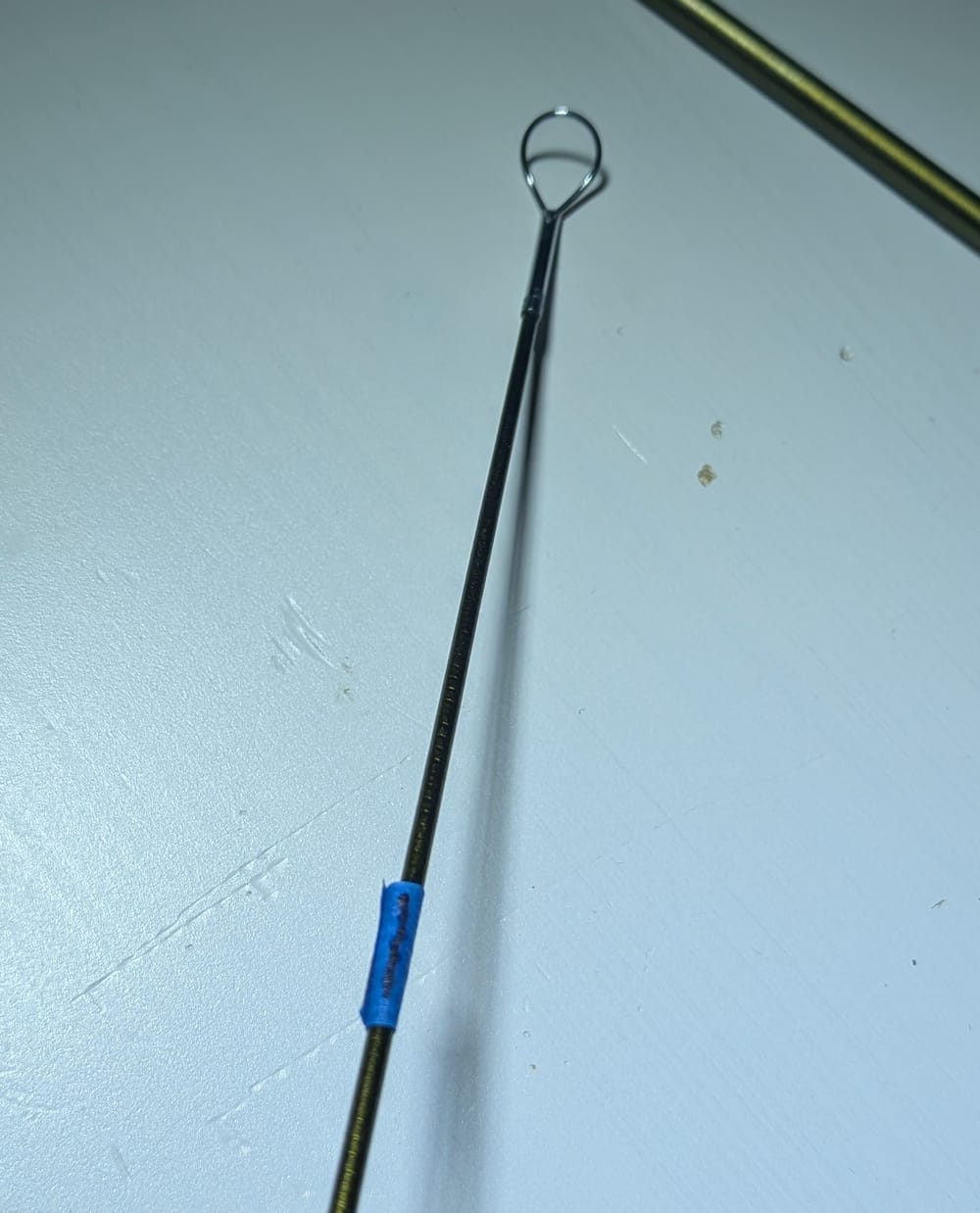
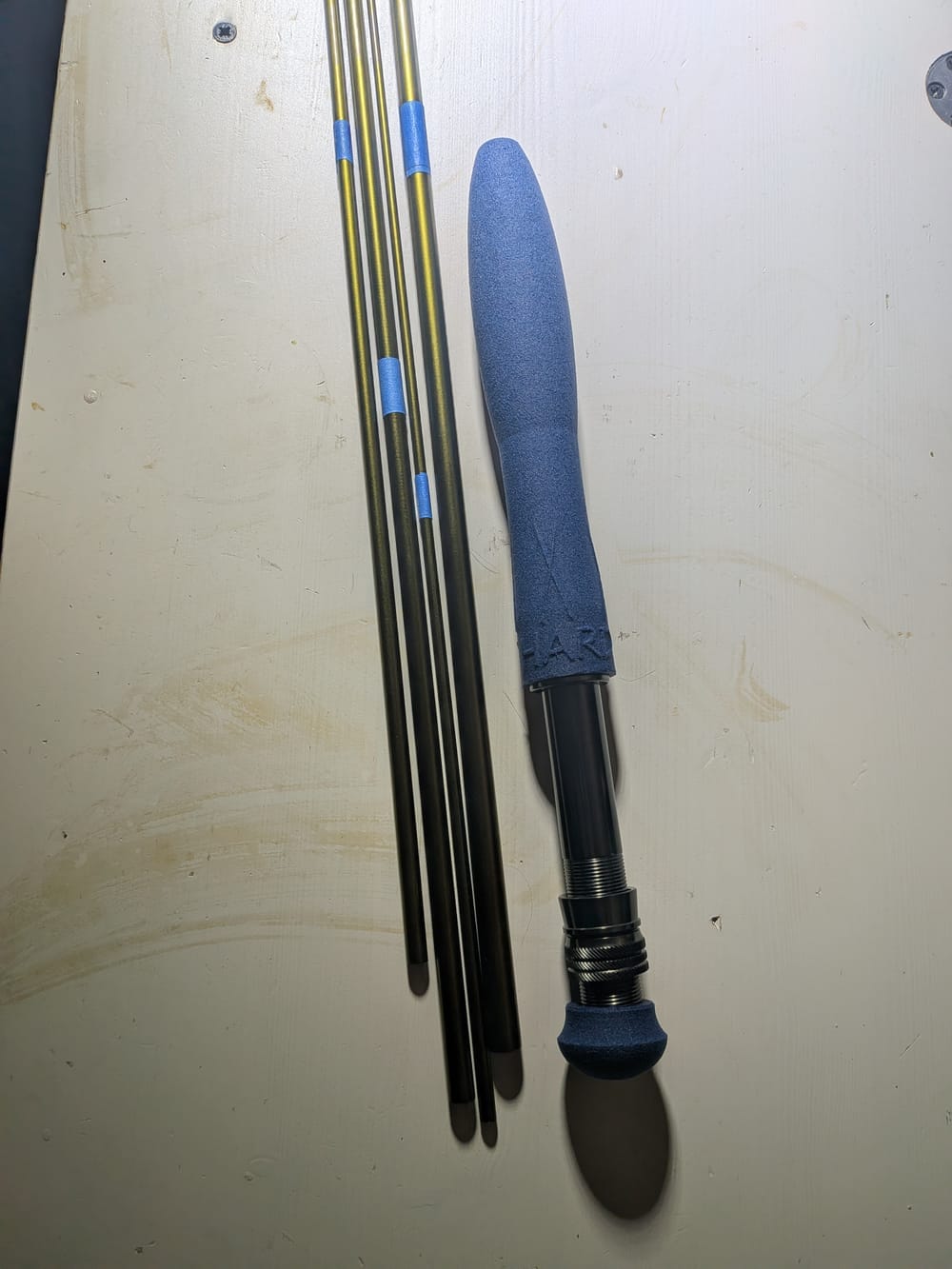
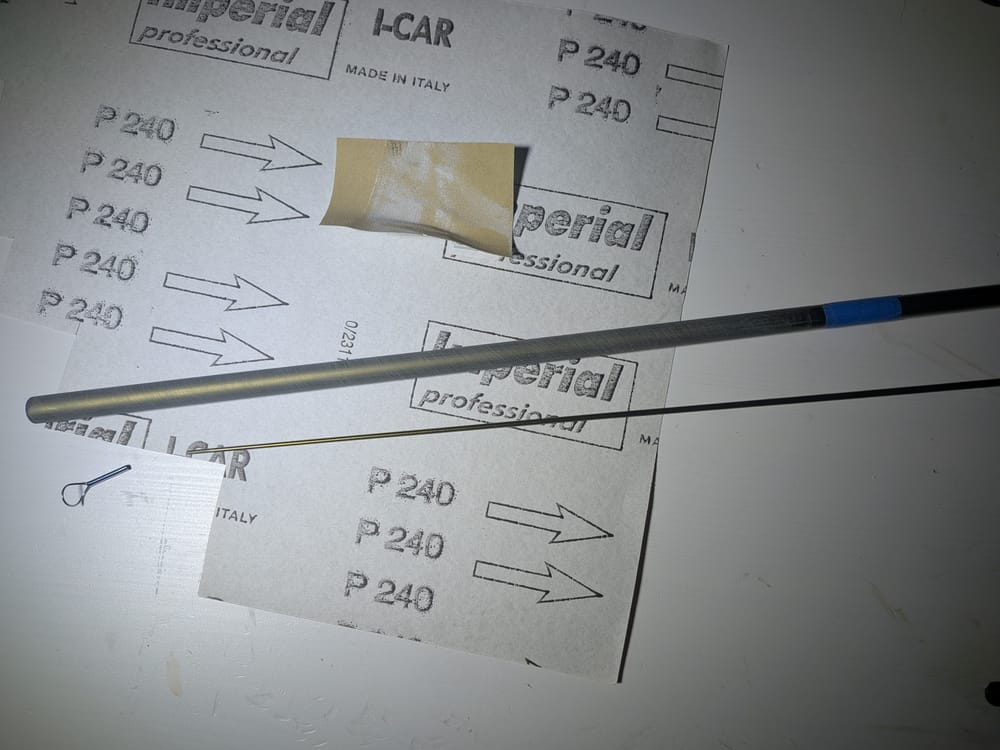
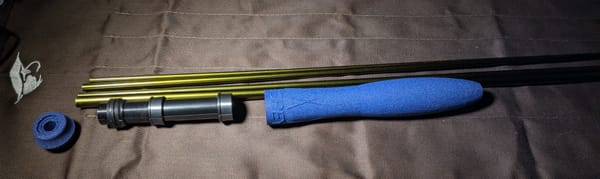
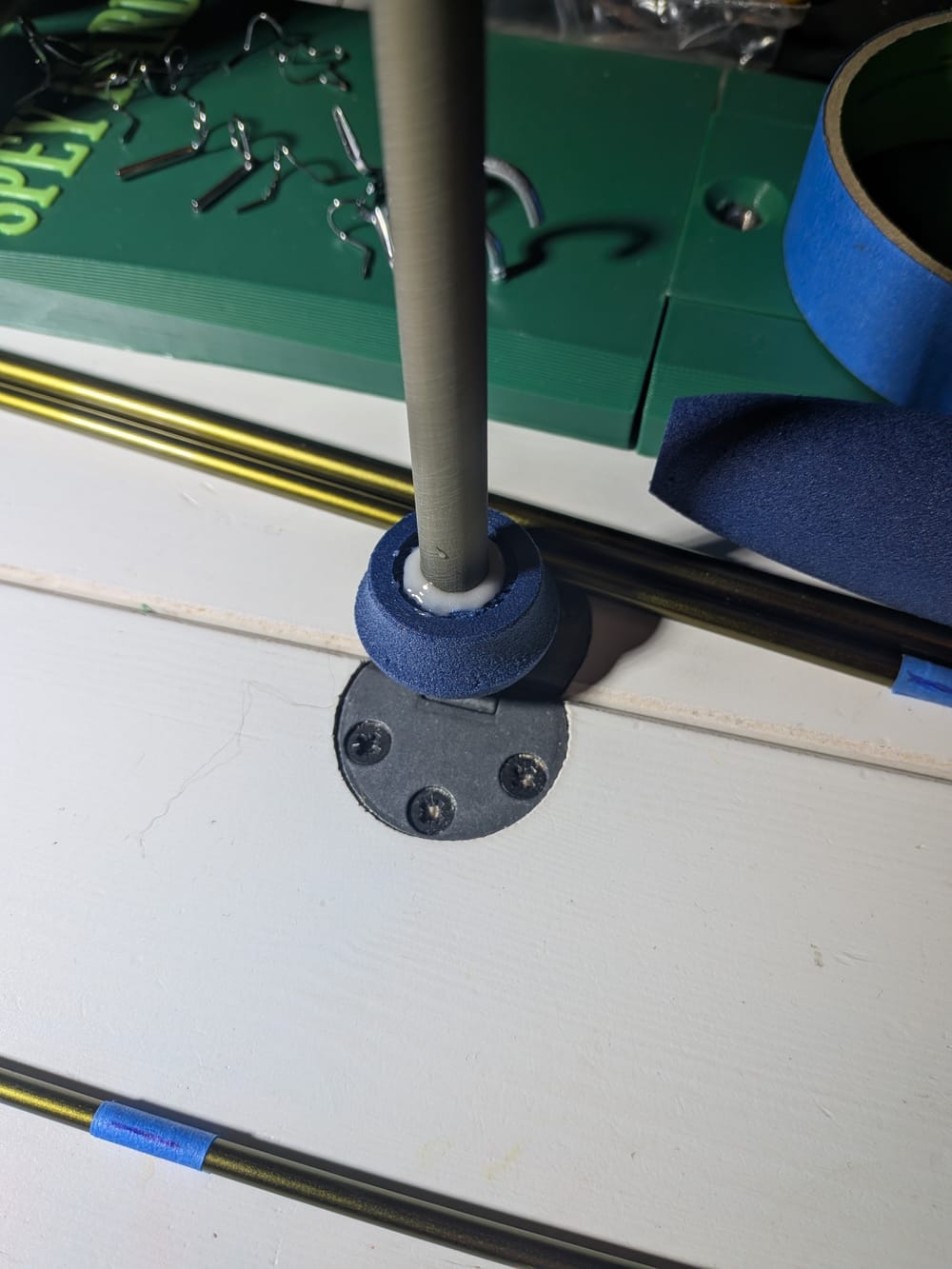
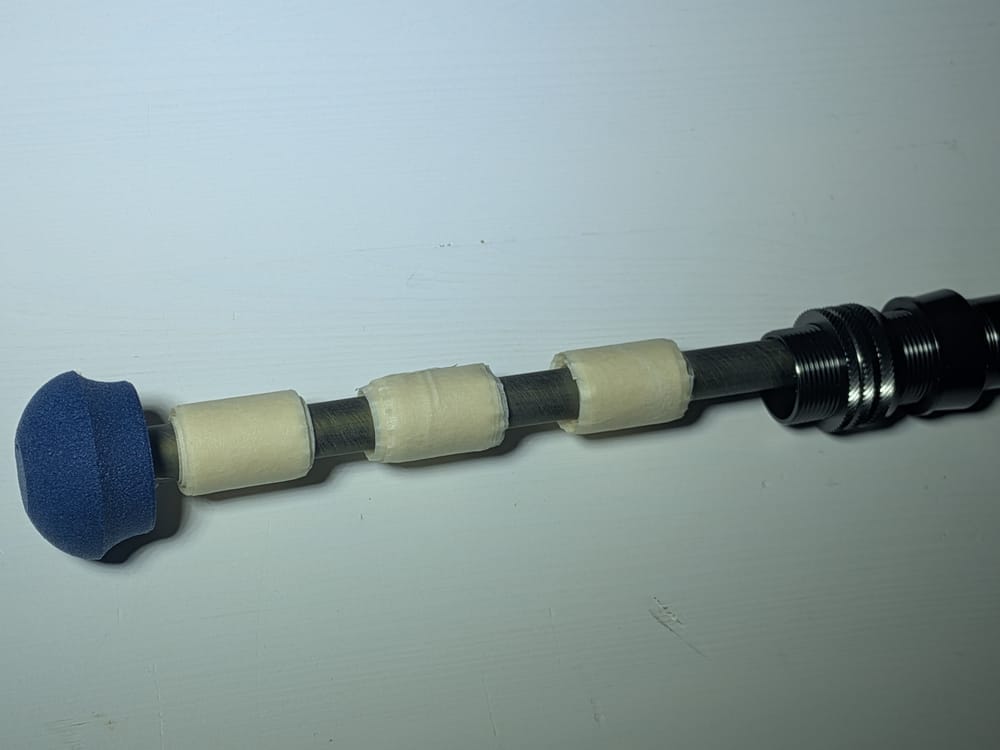
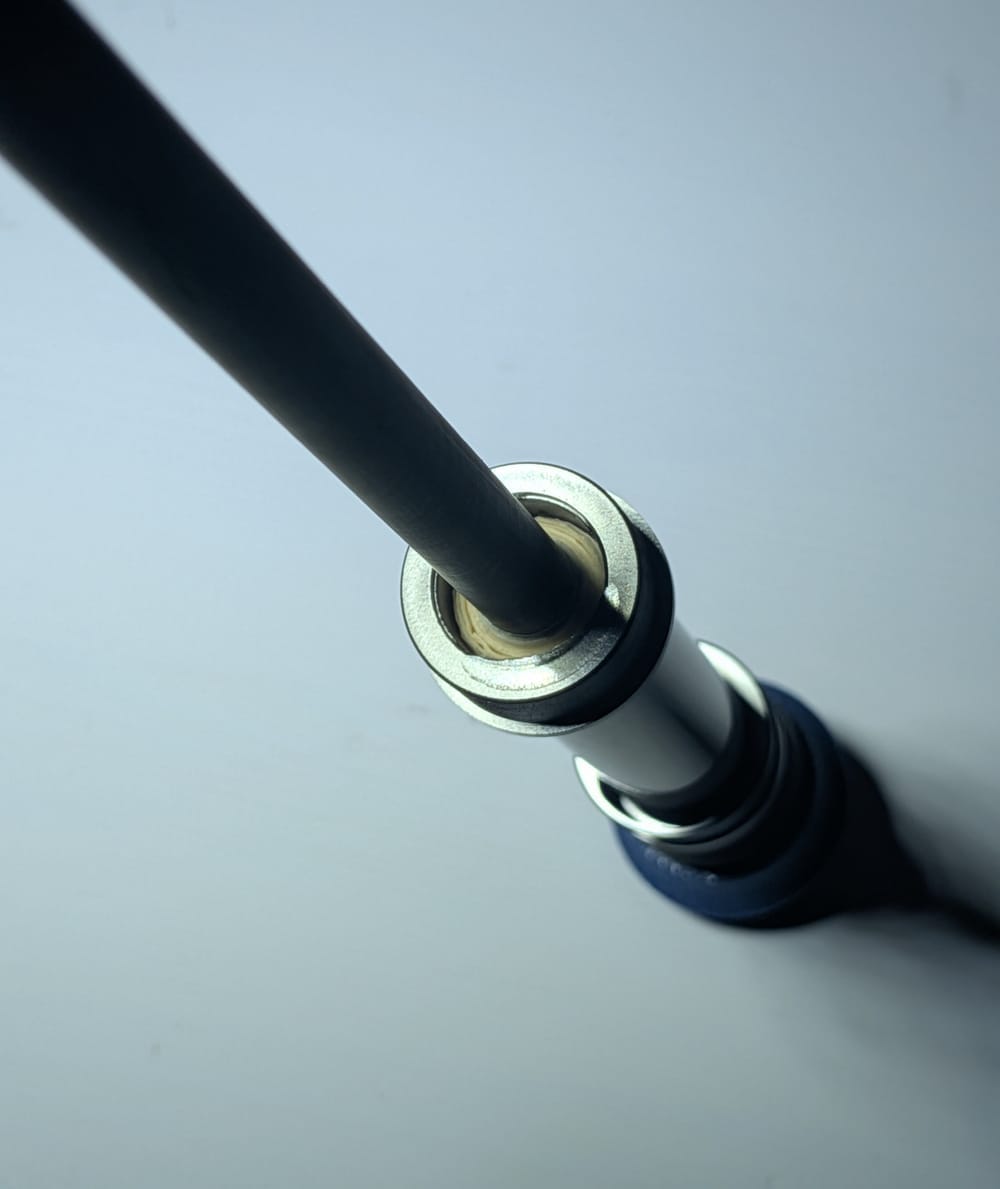
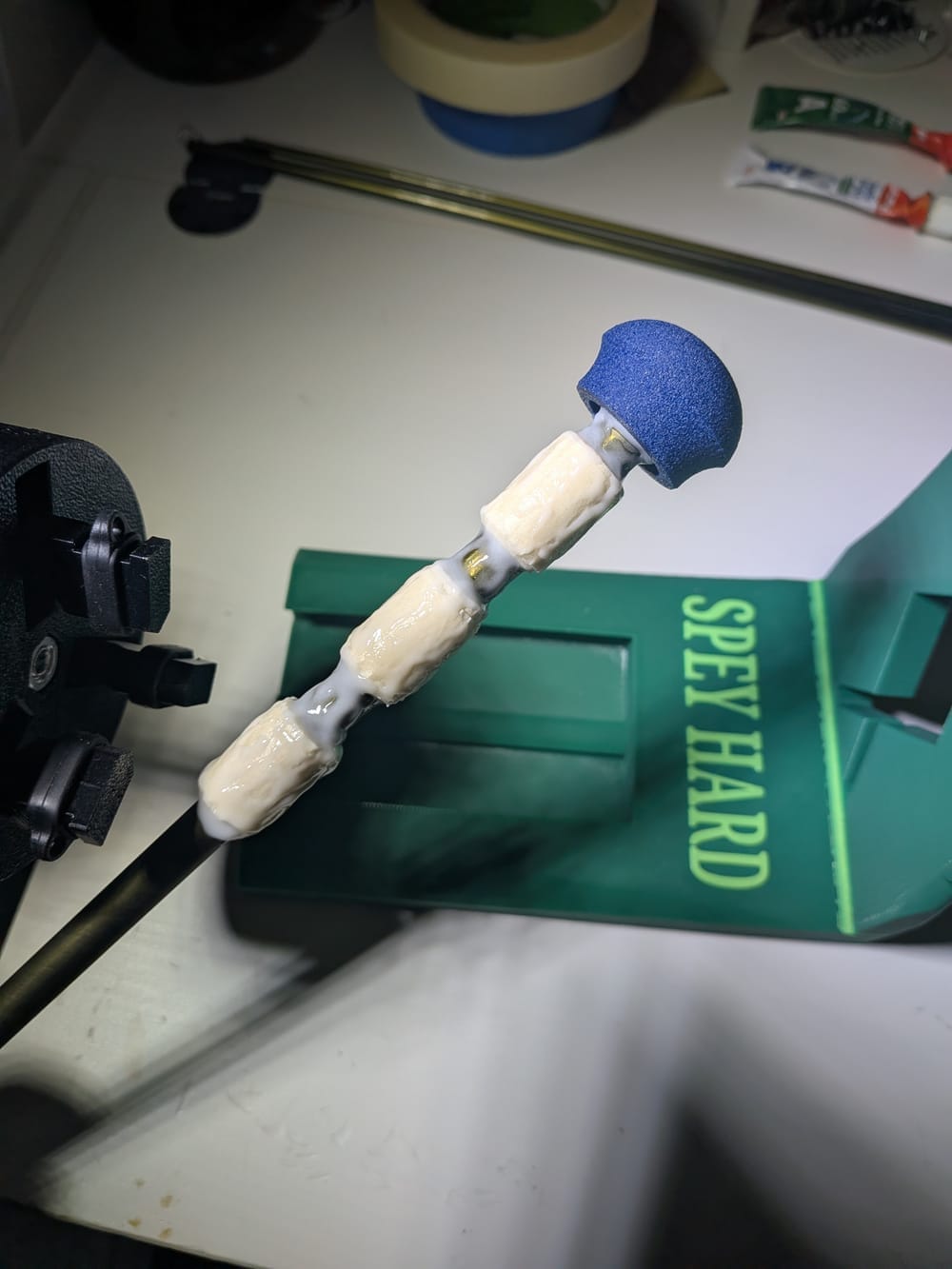
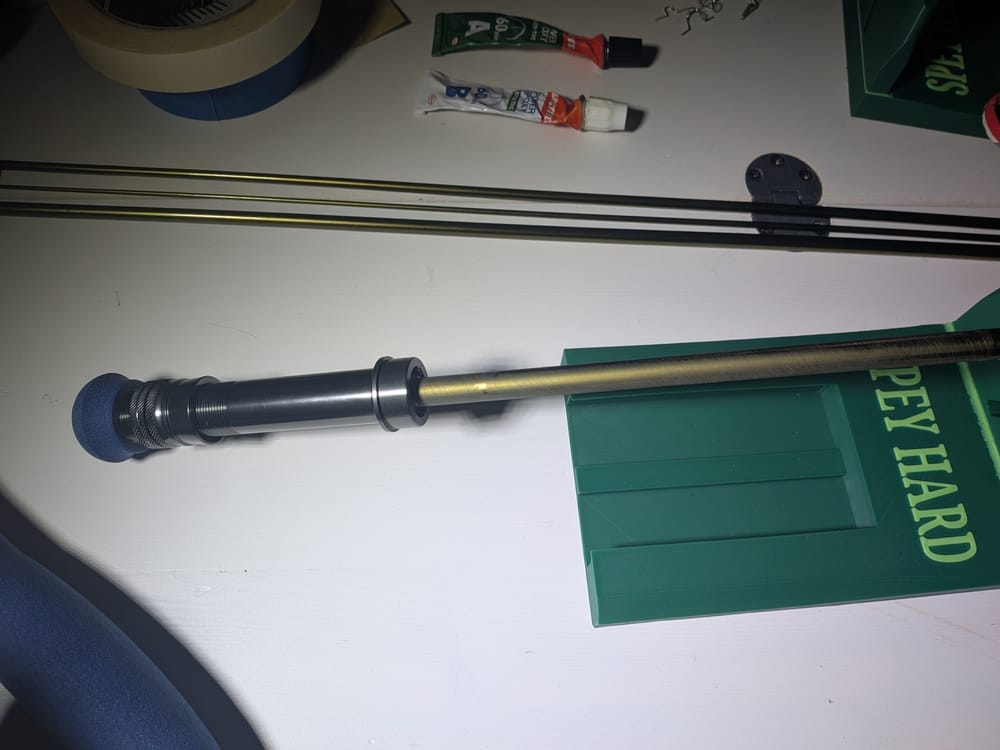
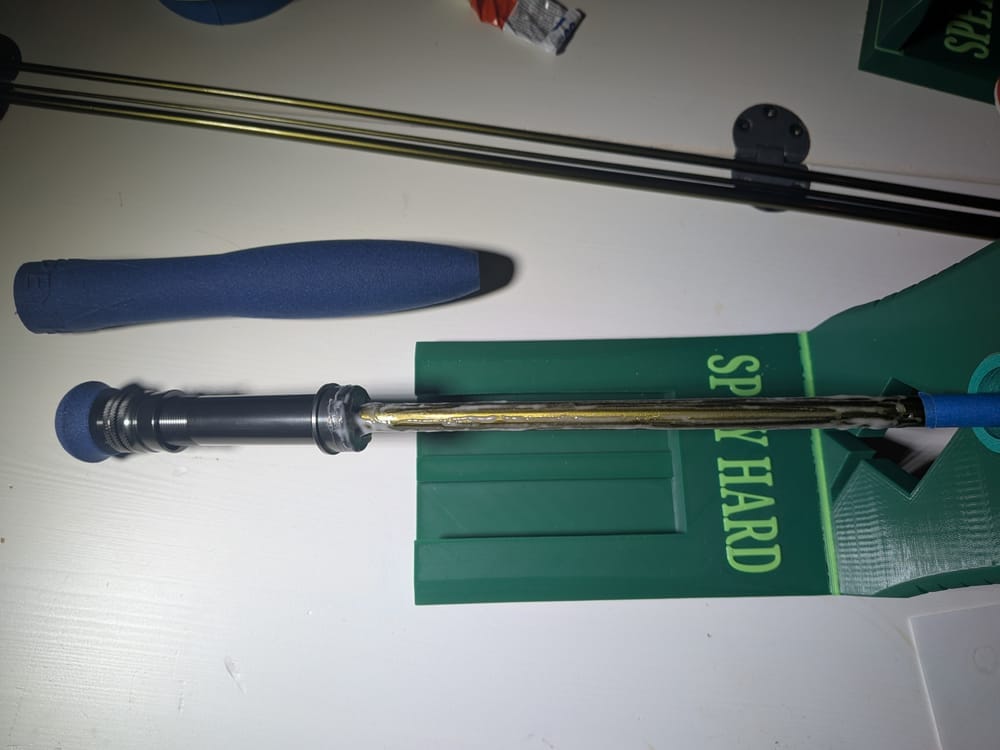
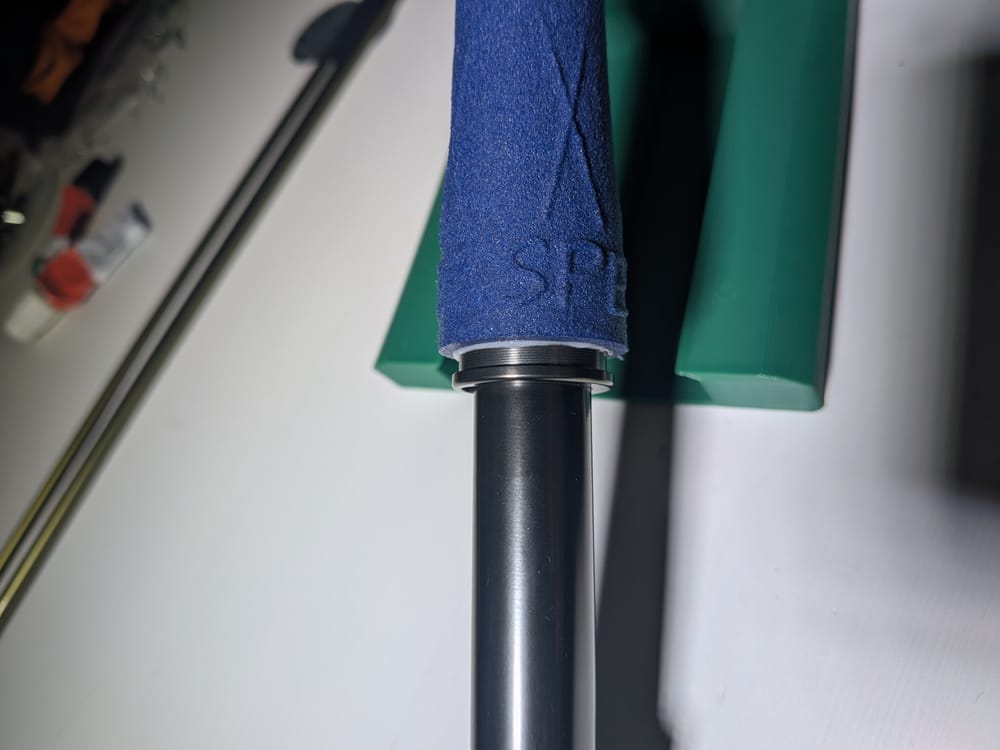
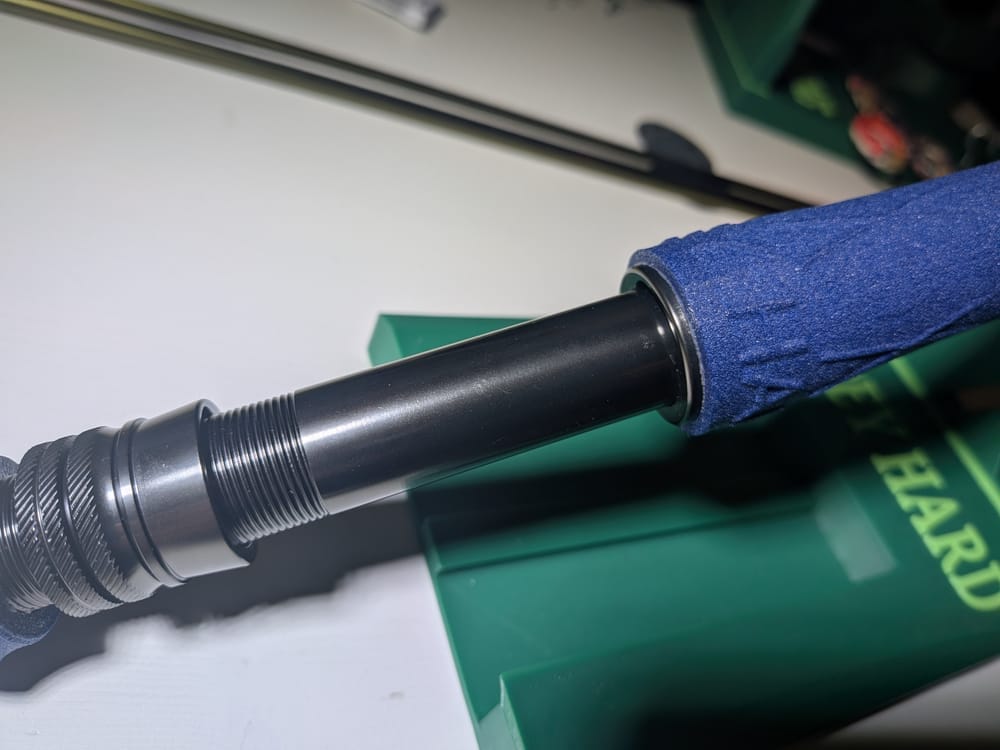
I glue the handle section as a whole first, and the tip-top guide. The tip-top guide goes on now because you need it when figuring out guide placement. Some more rushed builders probably glue everything at once (butt + reel seat + handle), but I glue one part at a time starting from the butt. I have a crooked-butt 7wt rod on the shelf as a reminder that unhurried and careful gluing is the absolute foundation of everything. I get the gluing done in about three days. I usually use Loctite Power Epoxy — it's produced durable bonds. It's easy to apply too. I've glued some handles with PU glue, but found it a difficult material to work with. It runs everywhere, and if you add water as an accelerator, the expansion is intense. It pushes glue foam out both ends. You need plenty of tape as protection so glue marks don't spread to visible sections.
For guide placement, you can usually get a measurement chart from the blank seller. If not, dig up a similar-length rod's guide spacing from the internet and use that as a starting point. Measured from the tip, mine came out with these numbers: 11.4cm, 24.1cm, 38.7cm, 55.3cm, 73.7cm, 92.7cm, 113.7cm, 137.2cm, 163.8cm, 193cm. At this stage it's enough to get them roughly taped or otherwise secured in place. We'll fine-tune the placement with a flex test. YouTube has videos on this — search for e.g. "static guide placement." The links below also have instructions: rodbuilding.org, Anglers Resource
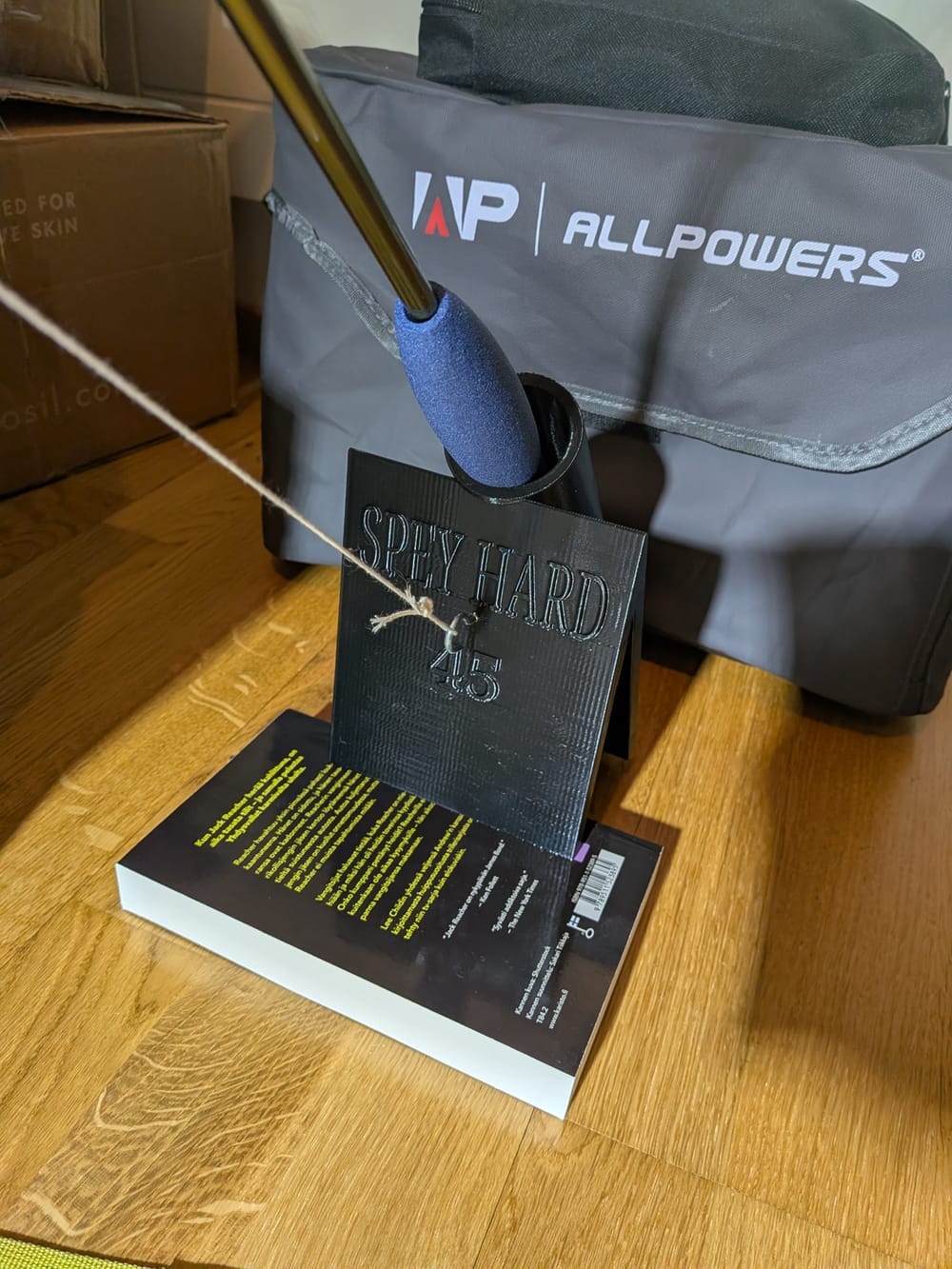
So in the flex test, check that no section looks like a cocked crossbow. Guides can of course be too close together too. If it looks cramped, you can leave out one guide entirely from the original placement. You can't really see this any other way than by flexing with line/thread running through the guides. I flex all the way down to the butt section when possible. This works reasonably well in normal living spaces with single-handed blanks. The challenges start when you're flexing a 15ft two-handed spey blank. You've got ceiling and walls in the way, nothing feels heavy enough when the blank has the power of a small village, and someone keeps bumping into it. Something always breaks.
I use fishing line as an aid here. It's easy to see. Tie a short piece to the tip-top guide and attach it to something heavy enough — a plastic bag filled with whatever works fine. Note that I'm flexing directly from the tip-top guide, not from the line I thread through the guides. That line through the guides only needs to be taut enough to see whether guide positions need adjusting. My thinking is that this way the blank gets to flex freely as it wants to. Let the blank tell you where it wants the guides.
If you build multiple rods on the same manufacturer's similar blanks, the measurements won't necessarily match exactly. At least with the cheapest blanks from different Chinese sellers, I've run into variations. Enough that building a second rod with the same measurements made no sense at all. Without the flex test, I would have just placed the guides at the same positions as the previous rod. Then you easily find yourself sitting in a river with a broken rod in your hands.